Skip to content
Before Tax Filing Season
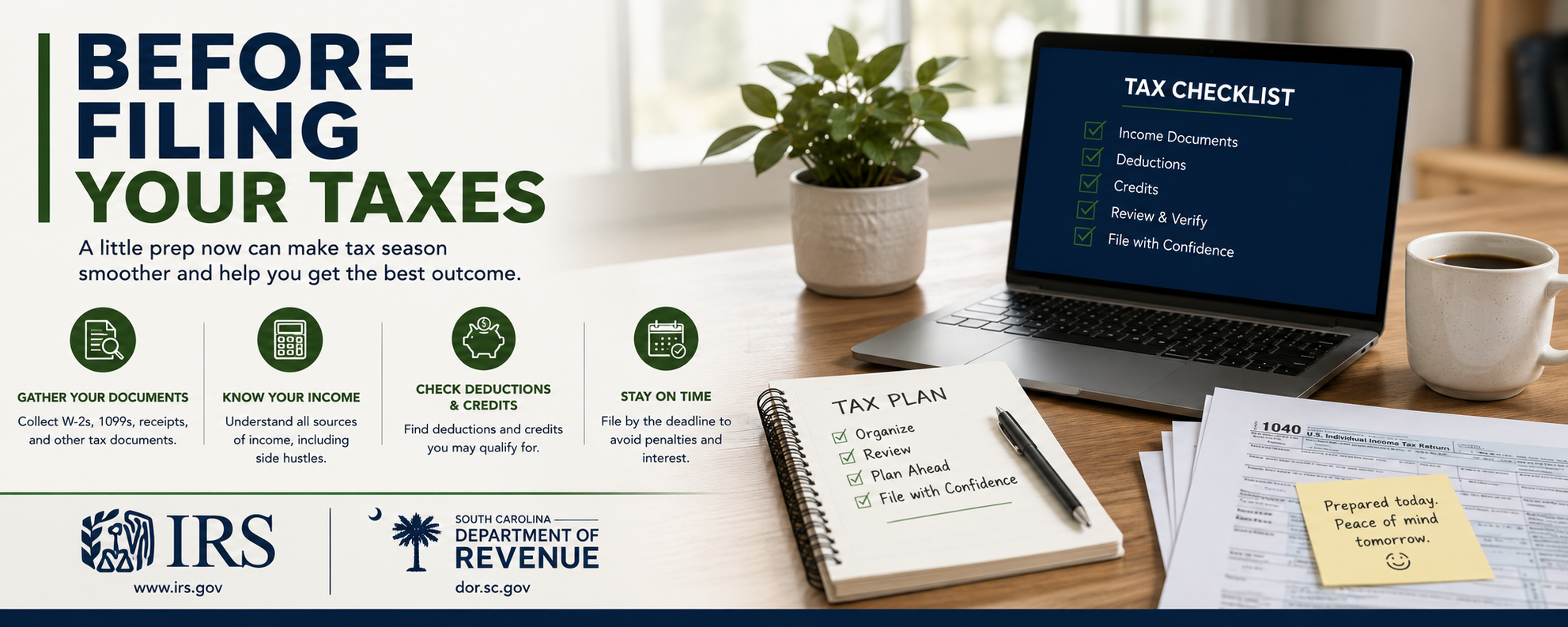
- Create an IRS Online Account.
- Save tax forms like your W-2 or any 1099s.
- Make sure your employer has your correct name, Social Security number, and address.
- Keep receipts for college tuition, student loan interest, or charitable donations.
- Review your paycheck to ensure federal and state taxes are being withheld.
- Decide whether to file yourself, use IRS Free File, or hire a tax professional.
- Keep all tax documents organized in one folder until you’re ready to file.
What is W-2?
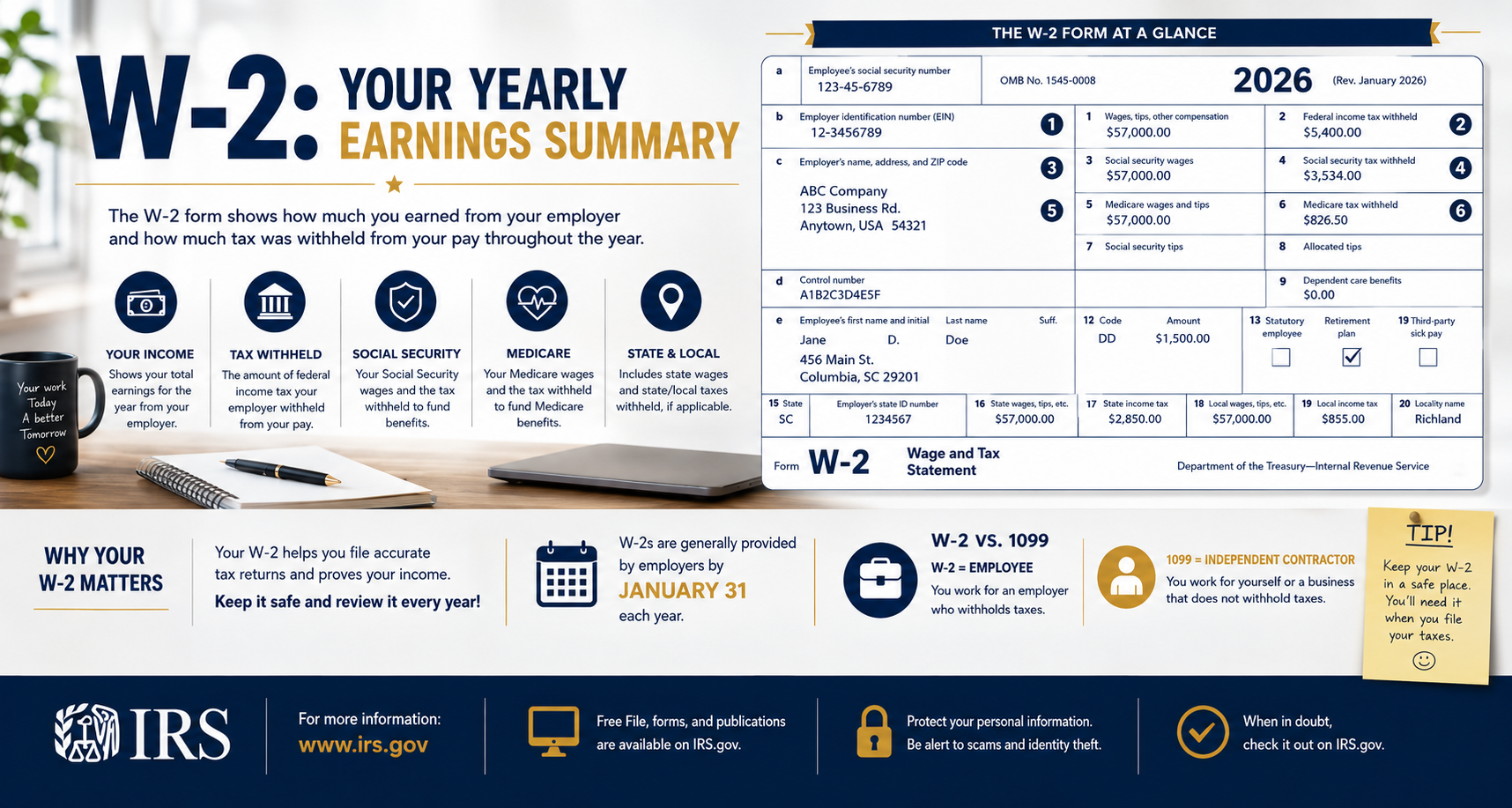
- W-2 is a tax form that shows how much money you earned from an employer during the year.
- It shows federal income tax withheld from your paychecks.
- It reports your Social Security and Medicare wages and taxes withheld.
- Your employer generally sends you a W-2 if you were their employee, rather than an independent contractor.
- You use the information on your W-2 when preparing your federal and state income tax returns.
- Employers generally must provide W-2s to employees by January 31 following the tax year.
- W-2 = Employee. 1099 = Usually independent contractor/nonemployee income.
What is 1099?
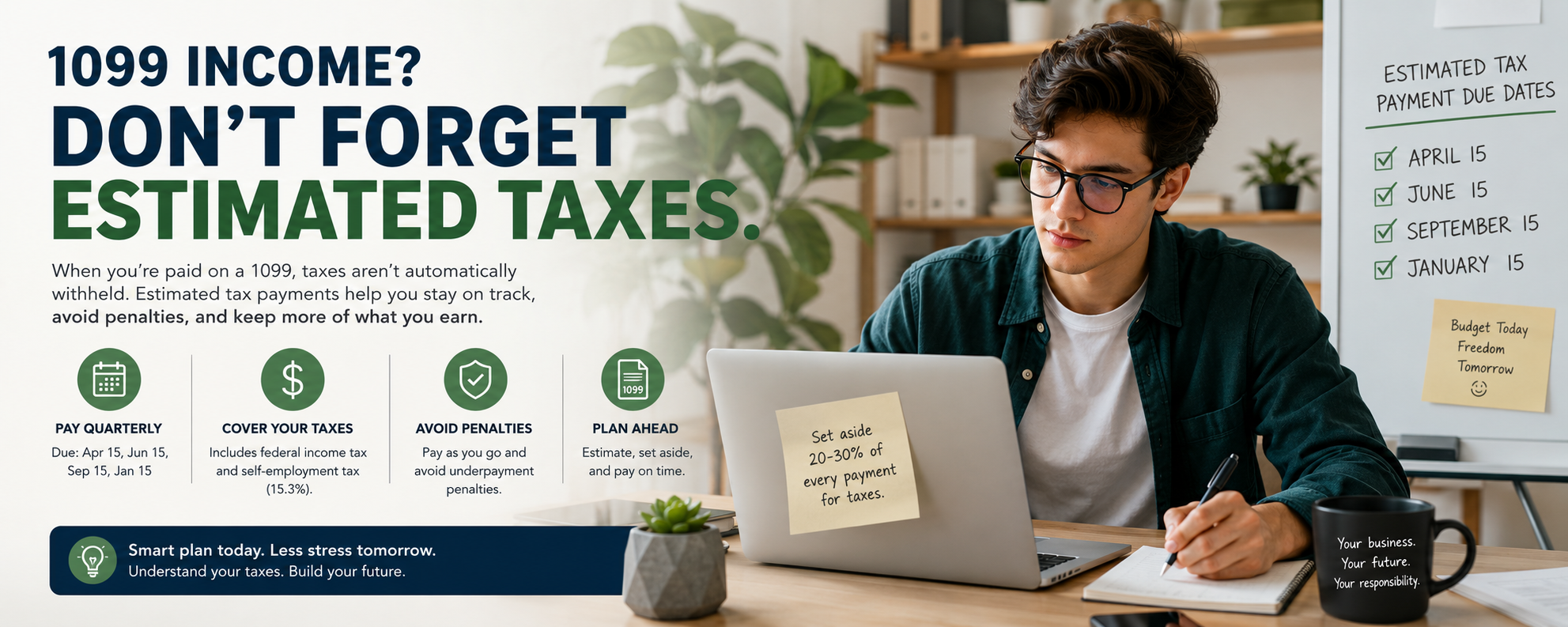
- 1099 is a tax form that reports income you earned outside a regular employee job.
- Taxes are usually not withheld from your payments.
- 1099-NEC is commonly used for freelancers, gig workers, and independent contractors.
- You must report your income when filing your tax return.
- You may owe income tax and self-employment tax.
- You may need to make estimated tax payments during the year.
- Remember: W-2 = Employee | 1099-NEC = Independent Contractor.

